Sweet Deer Christmas PNG: A Practical Asset for Holiday Design Workflows
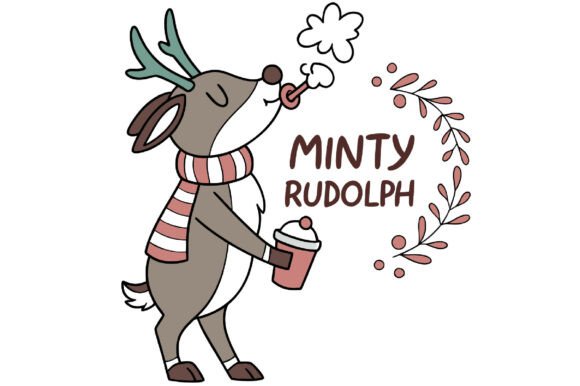
When preparing holiday-themed merchandise, marketing materials, or classroom resources, having a high-fidelity, production-ready asset saves time and preserves creative control. The Sweet Deer Christmas PNG is one such asset: a single 300 dpi, 12×12 inch file with a transparent background—designed to drop cleanly into real-world design environments without additional masking or cleanup.
This isn’t just another festive graphic. Its resolution and transparency make it compatible with professional print workflows and digital platforms alike. Whether you’re printing on fabric, ceramic, vinyl, or paper, the file’s technical specifications align with industry expectations—not just aesthetic preferences.
Where It Fits in Your Creative or Business Process
The Sweet Deer Christmas PNG enters your workflow most effectively after concept validation but before final output preparation. For example:
- A small-batch apparel seller sketches a holiday collection, confirms demand via social polls, then uses the PNG to mock up T-shirt placements in Adobe Illustrator before ordering samples.
- An educator building December lesson plans inserts the image into Canva templates for printable activity cards—no background removal needed, no pixelation when scaled down for student handouts.
- A freelance designer delivers branded holiday email headers to a client; the transparent background ensures seamless integration over any color or gradient used in the campaign’s HTML template.
In each case, the file serves as a verified, reusable component—not a placeholder. That reduces iteration cycles and minimizes last-minute adjustments caused by low-res or opaque source files.
Compatibility and Setup Requirements
To use the Sweet Deer Christmas PNG, you’ll need two things: a computer capable of unzipping the downloaded archive and a design application that supports layered or transparency-aware PNG handling. Common tools include Adobe Photoshop, Illustrator, Affinity Designer, GIMP, Canva (Pro), and Cricut Design Space.
It’s worth noting that while basic viewers like Preview (macOS) or Photos (Windows) can display the file, they won’t preserve transparency in editing contexts. If you’re using the image for cut files (e.g., vinyl decals), ensure your software interprets the alpha channel correctly—some vector converters require manual transparency flattening or background deletion steps before exporting to SVG or DXF.
Also, avoid opening the PNG directly in Microsoft Word or PowerPoint for print-ready output. These programs often compress or resample images silently, degrading quality. Instead, embed the file into a PDF layout or use them within dedicated design software first.
Practical Implementation Tips
Organize early. Save the unzipped Sweet Deer Christmas PNG in a project-specific assets folder—named clearly (e.g., “Holiday_Merch_Assets_2024”)—and back it up alongside your working files. This prevents version confusion later, especially if you plan multiple seasonal variations over time.
Test before scaling. Though the file is 12×12 inches at 300 dpi, verify how it renders at your intended output size. A 2-inch tall deer on a mug may look crisp, but the same placement on a 48-inch banner could reveal subtle anti-aliasing artifacts if stretched beyond native dimensions. When in doubt, scale proportionally and check pixel integrity at 100% zoom in your editor.
Color consistency starts with calibration. The note—“Actual colors may vary slightly due to monitor settings”—isn’t boilerplate. It reflects how RGB values translate differently across devices and output methods. If color accuracy matters (e.g., matching brand Pantones or coordinating with existing product photography), soft-proof the image using your printer’s ICC profile or consult a print provider about CMYK conversion timing. Don’t assume screen appearance equals final result.
Consider layering strategy. Because the background is transparent, you have full flexibility to add shadows, glows, or textured overlays behind or beneath the deer motif. In Illustrator, place the PNG inside a clipping mask with a custom grain texture for rustic packaging. In Canva, stack it over animated gradients for social media banners. The transparency isn’t just convenience—it’s functional versatility.
Integration With Broader Tools and Systems
The Sweet Deer Christmas PNG works best when treated as part of a system—not an isolated download. Pair it with:
- Brand style guides: Define approved spacing, sizing ratios, and companion fonts so the deer motif maintains visual harmony across T-shirts, mugs, and digital ads.
- Print-on-demand dashboards: Upload the file directly to platforms like Printful or Gelato. Most accept PNGs natively and auto-handle bleed and safe-zone margins—if you’ve sized and positioned the element appropriately beforehand.
- Digital asset management (DAM) practices: Even informal ones. Name the file descriptively (“Sweet_Deer_Christmas_Transparent_300dpi.png”) rather than “image123.png”. Add metadata tags like “holiday”, “deer”, “PNG”, and “transparent” if your OS or DAM tool supports it.
For teams, share usage guidelines—not just the file. A short internal doc outlining recommended minimum sizes, compatible substrates, and common pitfalls (e.g., “Don’t use this PNG for embroidery digitizing—it lacks stitch-path data”) improves consistency and reduces rework.
Long-Term Usability and Quality Control
This file isn’t disposable. With proper handling, it remains usable across multiple holiday seasons. To sustain its value:
- Store the original unedited PNG separately from derivative versions (e.g., “Sweet_Deer_RedOutline.png” or “Sweet_Deer_SmallCrop.png”).
- Document any edits made—especially color shifts or added effects—in a changelog text file alongside the assets.
- Re-test output fidelity every 12–18 months. Monitor calibration drift, software updates, or new printer models may affect rendering—even with the same source file.
Also consider accessibility implications. While the image itself is decorative, ensure surrounding text (e.g., on greeting cards or web banners) meets contrast standards. The deer motif shouldn’t interfere with legibility—use drop shadows or light/dark overlays where needed.
Real-World Workflow Example: Launching a Holiday Product Line
A small business owner plans a limited-run line of holiday tote bags. Their process looks like this:
- Week 1: Finalize bag material, size, and handle style. Source vendor specs (bleed, safe zone, color mode).
- Week 2: Import the Sweet Deer Christmas PNG into Illustrator. Resize to fit the front panel, apply a subtle white stroke for contrast against dark fabrics, export as PDF/X-4 for vendor submission.
- Week 3: Receive physical proof. Compare printed color to on-screen version using a calibrated monitor and lighting conditions similar to end-use environment (e.g., retail shelf vs. home gifting).
- Week 4: Approve and schedule production. Archive all versions—including original PNG, edited AI file, exported PDF, and proof notes—for next year’s refresh.
No step relies on guesswork. Each builds on the previous, with the Sweet Deer Christmas PNG acting as the stable, measurable foundation.
That’s the practical advantage: it removes ambiguity. You’re not troubleshooting transparency issues mid-deadline or resizing poorly sourced clipart. You’re executing—confidently, consistently, and efficiently.